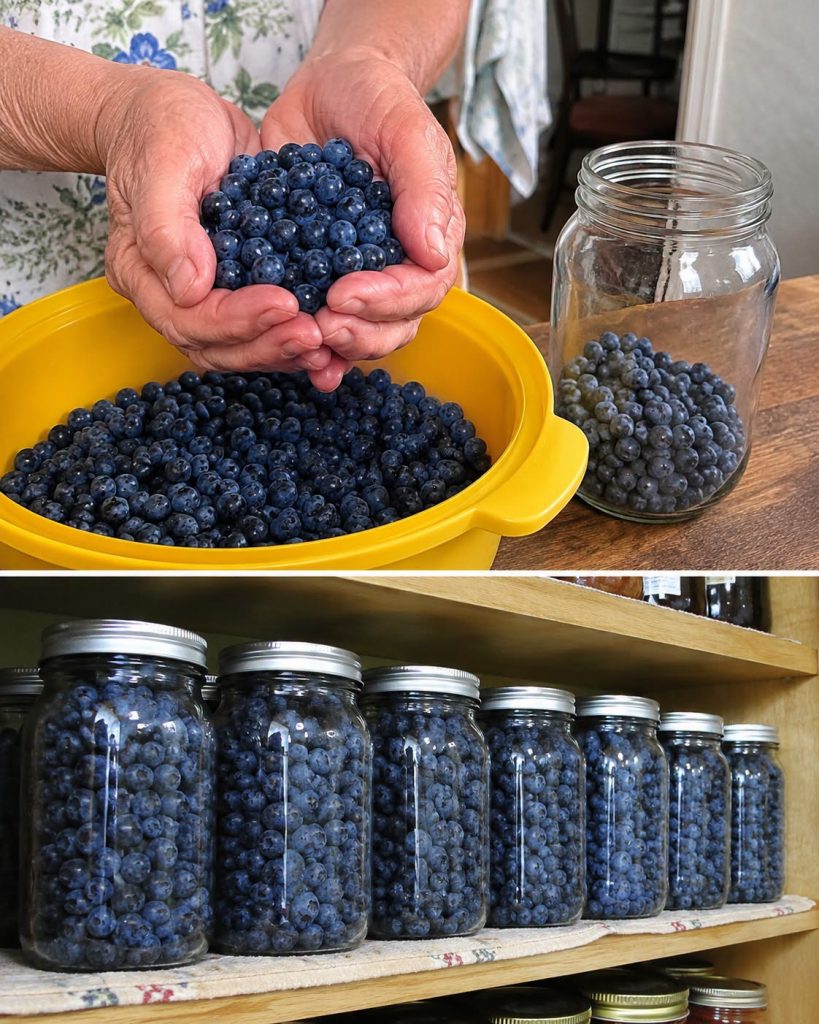
Place the blueberries in a shallow, well-ventilated container. Line the bottom with paper towels to absorb excess moisture.
Avoid completely airtight containers unless the berries are perfectly dry. A container with small ventilation holes or a lid placed loosely on top usually works better.
Keep the blueberries on a refrigerator shelf where the temperature remains stable. Avoid storing them in the refrigerator door because the temperature changes whenever the door is opened.
Check the berries every few days and remove any that are beginning to soften.
## A Vinegar Rinse May Help Extend Freshness
A mild vinegar rinse may help reduce mold spores on the surface of the blueberries.
Mix approximately one part regular vinegar with three parts cold water. Place the blueberries in the mixture briefly, then rinse them thoroughly with clean water.
The most important step is drying. The berries must be completely dry before being returned to the refrigerator. Otherwise, the extra moisture may cause them to spoil faster.
The vinegar taste normally disappears after proper rinsing.
## Freeze Blueberries for Several Months
Freezing is the most reliable method when you want blueberries to last for months.
### How to Freeze Them
1. Remove damaged or overripe blueberries.
2. Rinse them gently if you prefer to freeze them already cleaned.
3. Dry the berries very thoroughly.
4. Spread them in a single layer on a tray or baking sheet.
5. Freeze them for a few hours until firm.
6. Transfer them to a freezer bag or airtight freezer-safe container.
7. Label the package with the date.
Freezing the berries separately first prevents them from sticking together in one large clump. This allows you to take out only the amount you need.
## How Long Do Frozen Blueberries Last?