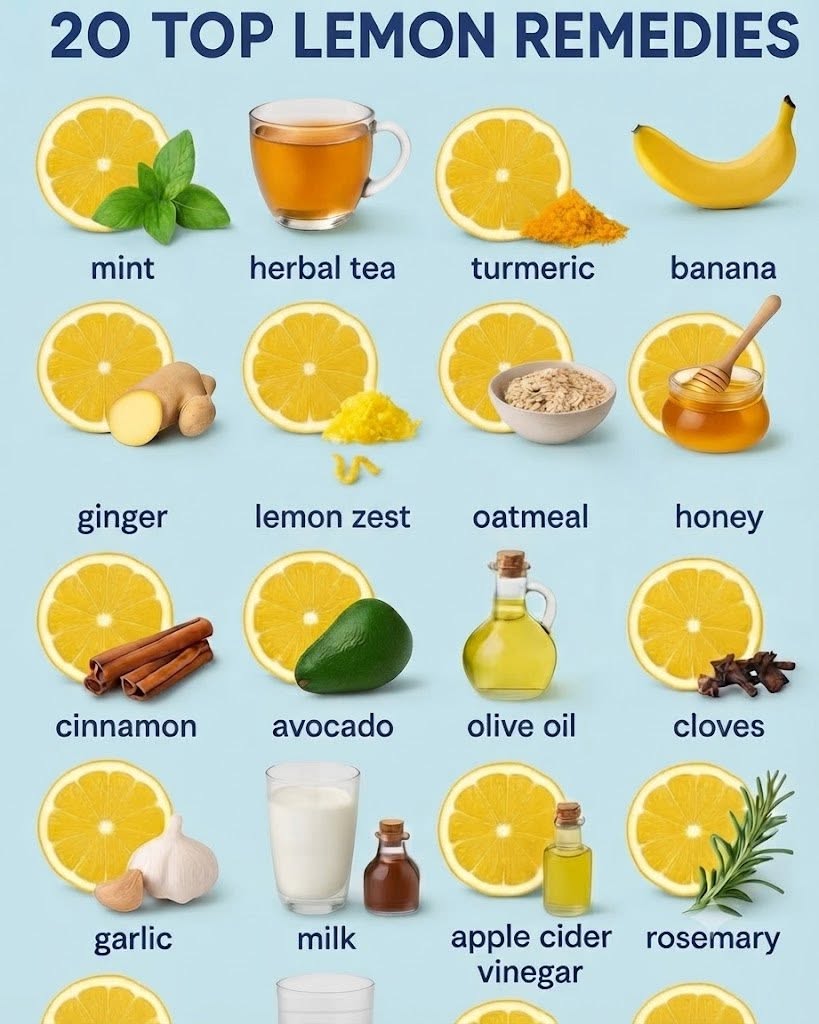
20 Traditional Lemon Remedies People Have Used for Generations — And What They May Offer
Lemons are one of those simple ingredients that seem to have a place in almost every kitchen.
They’re used in cooking, drinks, desserts, cleaning, and countless traditional home remedies.
For generations, people have turned to lemon when looking for a refreshing drink, a soothing home preparation, or an easy way to add more flavor to everyday foods.
While lemon isn’t a cure for disease, it does contain vitamin C and other plant compounds, and using it as part of a balanced diet can be a simple way to enjoy its nutritional benefits.
Here are 20 traditional lemon-based remedies and uses people commonly turn to.
1. Warm lemon water in the morning
One of the most popular traditions is drinking warm water with fresh lemon juice.
For many people, it’s simply a refreshing way to start the day and increase fluid intake.
The lemon also provides some vitamin C.
2. Lemon and honey for a sore throat
Warm water mixed with lemon and honey has long been used as a comforting home drink when someone has a sore throat.
Honey may help soothe throat irritation, while lemon adds flavor and vitamin C.
However, persistent or severe throat symptoms should be evaluated by a healthcare professional.
3. Lemon tea
Fresh lemon can be added to herbal or regular tea.
The warm liquid can be comforting, especially during cold weather, while lemon provides a pleasant citrus flavor.
4. Lemon and ginger drink
Lemon and ginger are commonly combined in traditional drinks.
Some people enjoy the combination after meals or when they want a warming beverage.
Ginger may also help with certain types of nausea, although effects vary from person to person.
5. Lemon-infused water
Adding lemon slices to a bottle or glass of water is an easy way to make plain water more appealing.
For people who struggle to drink enough water, a little citrus flavor can make staying hydrated more enjoyable.
6. Lemon with meals
Lemon juice can be squeezed over vegetables, fish, salads, beans, and other foods.
This doesn’t just add flavor.
Vitamin C can also help the body absorb non-heme iron found in plant foods.
7. Lemon and olive oil dressing
A simple mixture of lemon juice and olive oil can become a flavorful salad dressing.
Adding herbs, garlic, or black pepper can create an easy homemade alternative to heavily processed dressings.
8. Lemon peel in cooking
The yellow outer layer of the lemon contains aromatic oils and plant compounds.
Finely grated lemon zest can add strong flavor to meals without requiring much juice.
It’s important to wash lemons well before using the peel.
9. Lemon and warm water after a heavy meal
Some traditional practices recommend lemon water after eating a large meal.
For many people, this is simply a pleasant beverage.
However, there is no need to rely on lemon water as a “detox,” because the liver and kidneys already perform the body’s normal waste-processing functions.
10. Lemon as a source of vitamin C
Perhaps the most straightforward benefit is nutritional.
Lemons contain vitamin C, an essential nutrient involved in normal immune function, collagen production, wound healing, and antioxidant protection.
Eating a variety of fruits and vegetables remains the best way to obtain a broad range of nutrients.
11. Lemon and cucumber water
Lemon slices can be combined with cucumber and water for a refreshing drink.
This is especially popular during hot weather.
The main benefit may simply be helping people enjoy drinking more water.
12. Lemon with mint
Fresh mint and lemon make another traditional combination.
The result is a light, refreshing drink that can be enjoyed hot or cold.
13. Lemon and garlic in cooking
Lemon and garlic are frequently paired in Mediterranean-style cooking.
The combination works particularly well with vegetables, chicken, fish, beans, and roasted foods.
14. Lemon in homemade herbal drinks
Many traditional herbal beverages use lemon as a finishing ingredient.
A small amount of fresh juice can improve the taste of teas made with ingredients such as ginger or mint.
15. Lemon and honey in cold weather
A warm drink containing lemon and honey is often associated with winter and cold-season comfort.
Although it doesn’t cure an infection, the warm liquid and honey can be soothing.
Children under one year old should never be given honey because of the risk of infant botulism.
16. Lemon juice over fresh fruit
A little lemon juice can be added to cut apples, pears, or other fruits.
Besides adding flavor, the acidity can slow browning.
It’s a simple kitchen trick that has been used for years.
17. Lemon in soups
A small amount of lemon juice can brighten the flavor of soups and stews.
This is particularly useful for bean, lentil, vegetable, and chicken soups.
18. Lemon in homemade sauces
Lemon can be incorporated into sauces and marinades to provide acidity and freshness.
It can help balance richer ingredients and reduce the need for excessive salt in some recipes.
19. Lemon as a household cleaning ingredient
Lemon is also famous outside the kitchen.
Its acidity and fresh scent have made it a traditional household cleaning ingredient.
Lemon juice can sometimes help remove odors or loosen certain residues, although it should not be considered a substitute for appropriate disinfectants when disinfection is required.
Never mix lemon juice with bleach or other cleaning chemicals.
20. Simply eating lemon as part of a balanced diet
Perhaps the simplest “remedy” is not a remedy at all.
Lemon can be part of a healthy eating pattern alongside vegetables, fruits, whole grains, legumes, nuts, and other nutritious foods.
There is no single food that can prevent or cure every health problem.
What should you remember?
Lemons are nutritious and versatile, but online health claims sometimes go much further than the evidence supports.
Lemon water does not magically detox the body.
It doesn’t burn away fat on its own.
And it shouldn’t replace medical treatment.
For most people, the biggest advantages are much simpler: lemon adds flavor, provides vitamin C, and can make water and healthy foods more enjoyable.
A small fruit with many everyday uses
From a warm lemon-and-honey drink to a simple salad dressing, lemons have earned their place in traditional kitchens around the world.
Their benefits don’t need to be exaggerated.
Sometimes the most useful foods are the simplest ones.
Used sensibly, lemon can be a flavorful and nutritious addition to an everyday diet—without needing to be treated as a miracle cure.