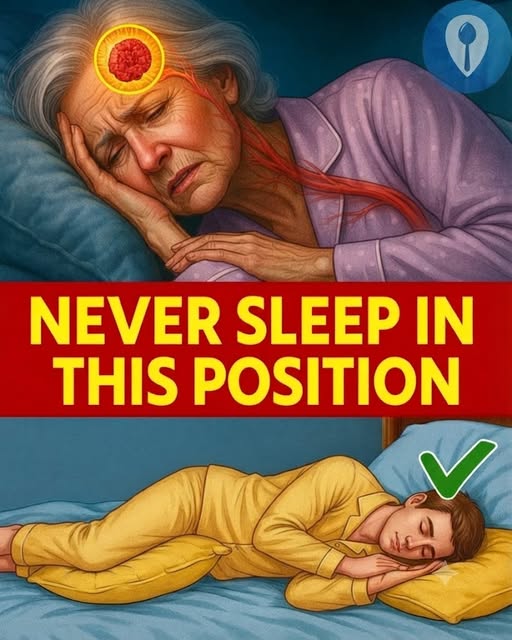
It presents several sleeping positions and nighttime habits as potentially harmful:
- Sleeping flat on your back without a pillow
It claims that this may interfere with blood drainage from the brain and potentially increase the risk of blood pooling and clot formation. - Sleeping on your stomach
The article says that turning the neck while sleeping face-down could put pressure on blood vessels and that this position may also make breathing more difficult. - Covering your head with a heavy blanket
It warns that this could reduce airflow and increase carbon dioxide levels while decreasing oxygen. - Sleeping upright in a recliner
The article claims that prolonged semi-upright sleeping could encourage blood pooling in the legs and increase clot risk. - Sleeping on your right side with your arm underneath the pillow
It claims that this may compress blood vessels and nerves and interfere with circulation. - Frequently tossing and turning
The article connects poor-quality, fragmented sleep with fluctuations in blood pressure and stress hormones. - Missing blood-pressure or heart medication before bedtime
It strongly emphasizes taking prescribed medications consistently and says that missing doses can contribute to blood-pressure problems and stroke risk. - Sleeping in a cold room without proper neck support
It claims that cold temperatures can constrict blood vessels and that poor neck alignment may further affect circulation. - Going to sleep immediately after a heavy meal or alcohol
The article recommends leaving 2–3 hours between a heavy meal and bedtime and limiting alcohol close to bedtime.
What it recommends
The article generally recommends:
- Slightly elevating the head while sleeping.
- Side sleeping, particularly on the left side.
- Keeping the neck properly supported.
- Avoiding sleeping face-down.
- Avoiding putting an arm underneath the pillow.
- Keeping your head uncovered while sleeping.
- Taking prescribed medications consistently.
- Avoiding heavy meals and alcohol shortly before bed.
- Addressing persistent snoring or poor sleep quality.
An important warning about the article
I would not take all of its medical claims literally. Some of the advice has a reasonable connection to sleep health—for example, side sleeping can help some people with obstructive sleep apnea—but the stronger claim that a particular sleeping position directly causes a stroke is not established.
For example, medical literature supports a strong relationship between sleep-disordered breathing/obstructive sleep apnea and stroke risk, but that is different from proving that simply sleeping on your back, right side, or stomach directly causes a stroke.
So the safest interpretation is: the article is trying to encourage healthier sleep habits, but some of its explanations about blood flow and stroke appear much more certain than the available evidence warrants.
If you want, I can also go through the article claim by claim and tell you in English which statements are scientifically supported, questionable, or false.