White Garlic vs. Purple Garlic: What’s the Difference and Which Is Better?
Garlic is one of the most popular ingredients used in kitchens around the world. It adds a strong aroma and delicious flavor to soups, sauces, vegetables, meat, and many other dishes.
When shopping for garlic, you may notice that some bulbs have white skin while others have purple or reddish streaks. This raises an interesting question: Is purple garlic healthier than white garlic?
The answer is not as simple as choosing one color over the other. Both types can be nutritious, but they can differ in flavor, texture, growing conditions, storage, and the amounts of certain plant compounds they contain.
What Is White Garlic?
White garlic is the type most commonly found in supermarkets and kitchens.
It usually has several layers of white or cream-colored skin, with pale cloves inside. Depending on the variety, the cloves may be large and relatively uniform.
White garlic is popular because it generally has:
- A familiar garlic flavor
- A firm texture
- Good storage ability
- Many uses in cooking
- Easy availability
However, it is important to remember that “white garlic” does not describe just one specific variety. Different varieties can have different flavors and characteristics.
What Is Purple Garlic?
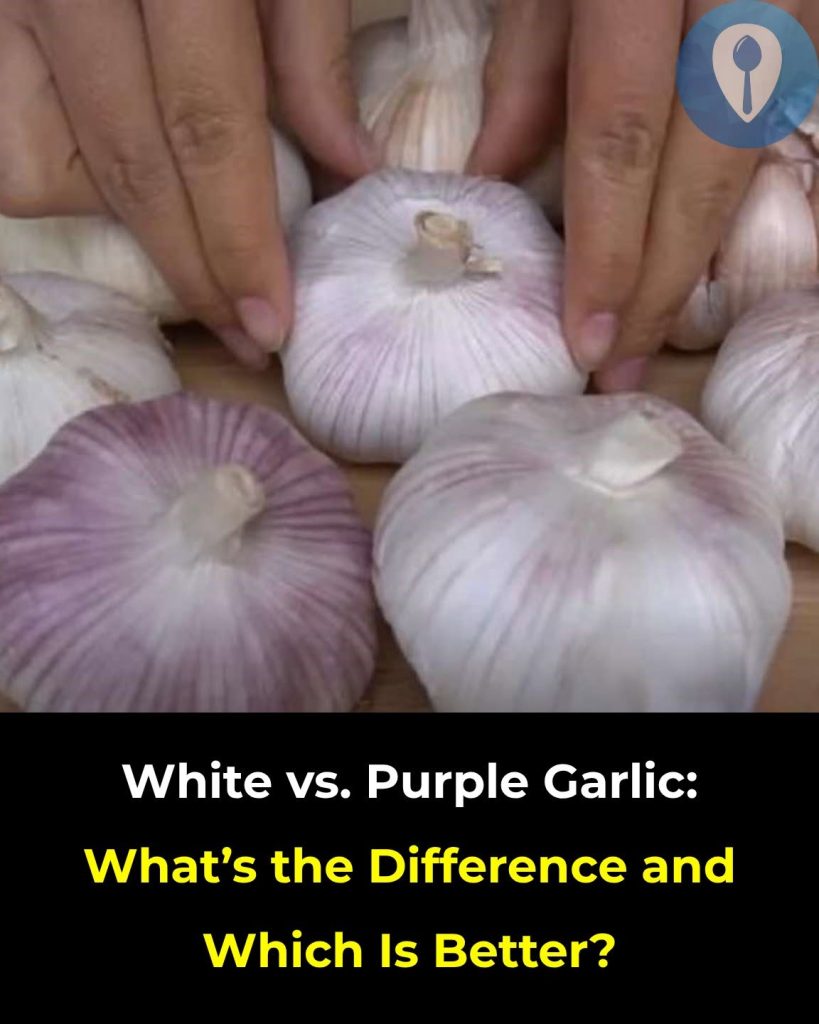
Purple garlic refers to varieties whose outer skin contains purple, reddish, or violet streaks.
The purple color comes from natural pigments, including compounds known as anthocyanins, although the exact composition varies between varieties.
Purple garlic is often associated with certain hardneck varieties. Compared with some white varieties, it may have:
- A stronger aroma
- A more intense flavor
- A slightly spicier taste
- Firmer cloves
- Different storage characteristics
However, these characteristics depend on the particular variety and growing conditions.
1. The Most Obvious Difference Is Appearance
The easiest difference to notice is the color of the skin.
White garlic usually has white or cream-colored skin and pale cloves. Purple garlic often has purple or reddish streaks on its outer skin.
The color is mainly a characteristic of the variety. It does not automatically mean that purple garlic is much healthier than white garlic.
2. The Flavor Can Be Different
Flavor is one of the main reasons people choose one type of garlic over another.
Some purple garlic varieties have a stronger aroma and a sharper or spicier taste. White garlic can also be very strong, depending on the variety.
The flavor of garlic is affected by several factors, including:
- The variety
- Growing conditions
- Harvest time
- Storage
- How the garlic is prepared
Therefore, it is not always possible to predict the flavor simply by looking at the color of the skin.
3. Why Does Garlic Have Such a Strong Smell?
One of the compounds associated with garlic’s characteristic smell and flavor is allicin.
Allicin is not simply present in large amounts in an intact garlic clove. When garlic is cut, crushed, or chopped, an enzyme called alliinase helps convert sulfur-containing compounds into allicin and other compounds.
This chemical reaction is responsible for much of the strong smell and flavor that we associate with fresh garlic.
4. Purple Garlic Contains Anthocyanins
One interesting feature of purple garlic is the presence of natural pigments called anthocyanins.
Anthocyanins are compounds responsible for red, purple, and blue colors in many plants. They are also associated with antioxidant activity.
Purple garlic may contain these pigments, particularly in its colored skin. However, the amount can vary significantly between different varieties.
Therefore, it would be misleading to say that purple garlic is automatically much healthier simply because it is purple.
5. Both Types Contain Sulfur Compounds
Both white and purple garlic contain sulfur-containing compounds that have been studied for their biological effects.
These include:
- Allicin
- Alliin
- S-allyl cysteine
- Other organosulfur compounds
Researchers have studied garlic in relation to cardiovascular health, blood pressure, cholesterol, inflammation, and oxidative stress.
However, the evidence varies depending on the type of garlic preparation and the specific health effect being studied.
Garlic should be considered part of a healthy diet, not a replacement for medical treatment.
6. Which Type Has More Antioxidants?
There is no simple answer.
Purple garlic can contain pigments with antioxidant properties, and some studies have found differences in antioxidant activity between garlic varieties.
However, antioxidant levels can be influenced by:
- Variety
- Soil
- Climate
- Harvest time
- Storage
- Processing
For this reason, it would be inaccurate to say that all purple garlic is healthier than all white garlic.
Both varieties can provide beneficial plant compounds as part of a balanced diet.
7. Vitamins and Minerals
Garlic is usually eaten in relatively small amounts, so it is not considered a major source of most vitamins and minerals.
Nevertheless, both white and purple garlic can provide small amounts of nutrients such as:
- Vitamin B6
- Vitamin C
- Manganese
- Selenium
- Calcium
The exact nutritional content can vary depending on the variety and growing conditions.
8. Garlic and Heart Health
Garlic has been studied extensively for its potential cardiovascular benefits.
Some research suggests that certain garlic preparations may have modest effects on:
- Blood pressure
- Total cholesterol
- LDL cholesterol
However, the strongest evidence is associated with certain standardized garlic preparations, rather than with the assumption that eating one particular garlic color will produce the same effect.
People with high blood pressure or high cholesterol should not replace prescribed medication with garlic.
9. Garlic and Blood Sugar
Researchers have also investigated whether garlic may affect blood sugar and glucose metabolism.
Some studies suggest that certain garlic preparations may have modest effects on blood glucose levels. However, the results are not consistent enough to consider garlic a treatment for diabetes.
People taking medication to lower blood sugar should be cautious with concentrated garlic supplements because supplements can potentially interact with medications or affect blood sugar levels.
10. Garlic and the Immune System
Garlic is often described as a natural immune booster.
Some garlic compounds have demonstrated antimicrobial activity in laboratory studies, which has attracted scientific interest.
However, laboratory results do not necessarily mean that eating garlic can prevent or treat infections in humans.
Garlic can be part of a healthy diet, but it should not replace vaccination, appropriate medical treatment, or good hygiene.
11. Which Garlic Is Better for Cooking?
The answer depends largely on your personal taste and the dish you are preparing.
White Garlic
White garlic can be an excellent choice for everyday cooking, including:
- Soups
- Sauces
- Stir-fries
- Roasted dishes
- Garlic butter
- Marinades
Its familiar flavor makes it extremely versatile.
Purple Garlic
Purple garlic may work especially well in:
- Roasted dishes
- Mediterranean-style recipes
- Salads
- Sauces
- Pickled garlic
- Dishes where a stronger garlic flavor is desired
Ultimately, taste is personal, so there is no single “best” choice.
12. Which Garlic Stores Better?
Storage depends heavily on the variety.
Some purple-striped hardneck varieties may have a shorter storage life than certain white softneck varieties.
In general, garlic should be stored in a place that is:
- Cool
- Dry
- Well ventilated
- Away from direct sunlight
Whole garlic bulbs should not be kept in sealed plastic bags because trapped moisture can encourage mold.
13. What About Sprouted Garlic?
Sometimes you may cut open a garlic clove and find a green shoot growing inside. This is known as sprouting.
Sprouted garlic is not automatically unsafe to eat if the clove is still firm and shows no signs of spoilage.
However, the flavor may become stronger, sharper, or more bitter.
If garlic becomes moldy, slimy, rotten-smelling, or severely discolored, it should be thrown away.
14. Raw Garlic vs. Cooked Garlic
The way garlic is prepared can significantly change its chemistry.
When garlic is crushed or chopped, enzymes help produce allicin and other sulfur-containing compounds. High heat, however, can reduce some of these compounds.
One common approach is to crush or chop garlic and let it sit for several minutes before cooking.
This does not mean that raw garlic is always healthier. Raw garlic can cause:
- Heartburn
- Stomach irritation
- Bad breath
- Digestive discomfort
Cooking garlic often makes it easier for some people to tolerate.
15. Can You Eat Garlic Every Day?
For most healthy adults, moderate amounts of garlic used in cooking can easily be part of a balanced diet.
There is no universally required daily amount. You do not need to eat large quantities of garlic to include it in a healthy diet.
Adding a small amount to vegetables, soups, grains, sauces, or protein-based dishes can provide flavor and beneficial plant compounds.
Who Should Be Careful With Garlic?
Garlic is generally safe when eaten as food, but concentrated garlic supplements require more caution.
People should speak with a healthcare professional before taking high-dose garlic supplements if they:
- Take blood-thinning medication
- Have a bleeding disorder
- Have surgery scheduled
- Take several medications
- Experience severe digestive symptoms
Garlic supplements can potentially affect blood clotting and interact with certain medications.
Common Myths About White and Purple Garlic
Myth 1: Purple Garlic Is Always Healthier
Not necessarily.
Purple garlic may contain additional pigments and different concentrations of certain plant compounds, but overall health effects depend on the specific variety and the person’s overall diet.
Myth 2: White Garlic Has No Antioxidants
This is false.
White garlic also contains sulfur-containing and phenolic compounds with antioxidant activity.
Myth 3: Garlic Can Replace Blood Pressure Medicine
No.
Garlic may have modest cardiovascular effects, but it cannot replace medication prescribed by a doctor.
Myth 4: Eating Huge Amounts of Garlic Gives More Benefits
More is not necessarily better.
Large amounts of garlic may cause heartburn, gas, nausea, or abdominal discomfort.
So, Which Garlic Should You Choose?
The simplest answer is:
Choose the garlic you enjoy and will use regularly.
If you prefer the stronger flavor of purple garlic, use purple garlic. If white garlic is cheaper or easier to find, it is also an excellent choice.
Both varieties can provide:
- Flavor
- Sulfur-containing compounds
- Antioxidants
- Small amounts of vitamins and minerals
The difference between the two is interesting, but it is unlikely to be the most important factor in your overall health. Your entire diet matters much more.
How to Add More Garlic to Your Diet
There are many easy ways to include garlic in everyday meals.
Roasted Garlic
Roasting garlic softens it and gives it a sweeter and milder flavor.
Garlic and Vegetables
Add chopped garlic to vegetables such as:
- Broccoli
- Green beans
- Mushrooms
- Carrots
- Zucchini
Garlic in Soups
A few cloves of garlic can add a lot of flavor to soup without requiring excessive salt.
Garlic With Whole Grains
Garlic can be mixed with brown rice, quinoa, or whole-grain pasta for extra flavor.
Garlic and Olive Oil
A small amount of garlic-infused olive oil can add flavor to vegetables and salads.
The Bottom Line
White and purple garlic are both nutritious choices, and neither can be considered universally superior.
Purple garlic is recognizable by its colored skin and may contain anthocyanins and different concentrations of other plant compounds. Some varieties also have a stronger and spicier flavor.
White garlic is widely available, versatile, and often has excellent storage characteristics.
Both varieties contain sulfur-containing compounds involved in the formation of allicin and other substances that have been studied for their potential biological effects.
Rather than worrying too much about the color of your garlic, focus on choosing fresh garlic, using it as part of a varied diet, and preparing it in ways that you enjoy.
Final Thoughts
The next time you see white and purple garlic next to each other, you do not necessarily need to ask, “Which one is healthier?”
A better question might be:
“Which one tastes better to me, and which one will I actually use?”
Purple garlic may offer unique pigments and a stronger flavor, while white garlic remains an extremely versatile kitchen ingredient.
Both can be valuable additions to meals that include vegetables, whole grains, legumes, lean proteins, and healthy fats.
Ultimately, there is no magical garlic variety that can replace a balanced diet or medical treatment. The greatest health benefit comes from regularly eating a wide variety of nutritious foods—and both white and purple garlic can be a flavorful part of that diet.