What to Do Immediately After a Snake Bite
A snake bite can be a frightening and potentially life-threatening emergency. Knowing what to do in the first few minutes can help reduce complications and give the victim a better chance of receiving effective treatment.
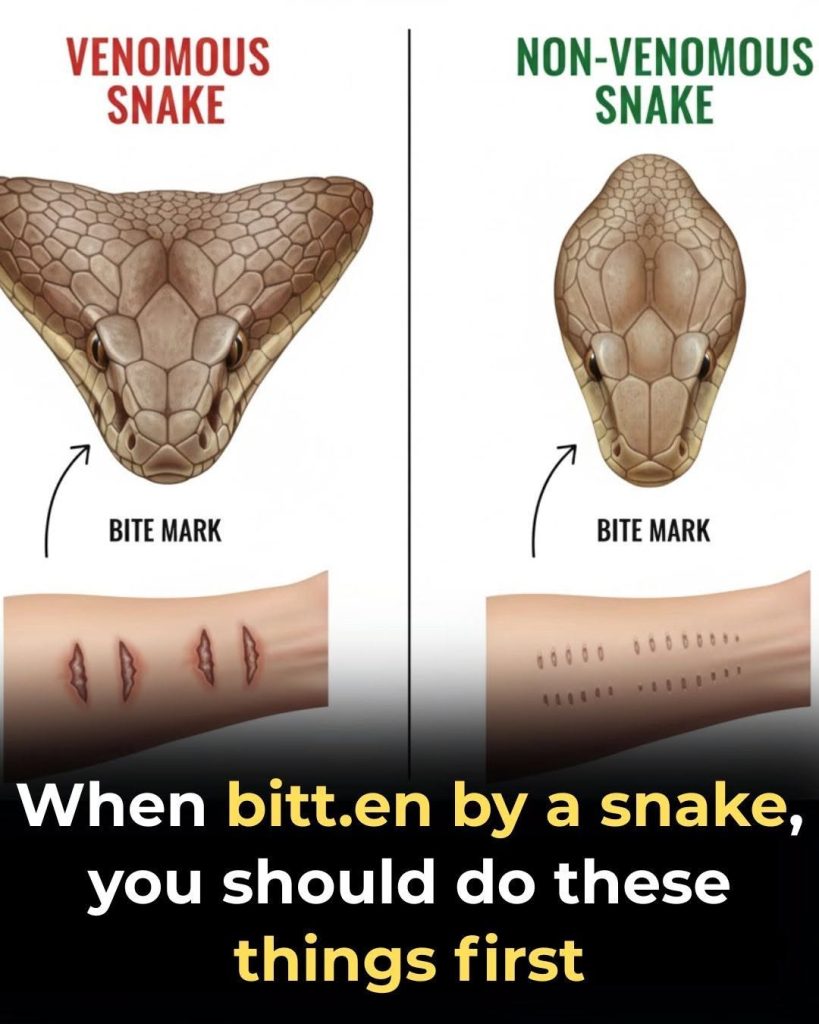
Not every snake bite involves venom, but it is often impossible to know immediately whether a bite is dangerous. For this reason, a suspected venomous snake bite should always be treated as a medical emergency.
The most important rule is simple: keep the person still and get medical help as quickly as possible.
1. Move Away From the Snake
The first priority is to make sure the victim is no longer in danger.
Move away from the snake and do not attempt to catch, kill, or handle it.
Trying to identify or capture the snake can result in another bite.
If the snake can be photographed safely from a distance, a photograph may help medical professionals identify it. However, personal safety should always come first.
2. Get Medical Help Immediately
A person who has been bitten by a snake should be taken to an appropriate medical facility as soon as possible.
Venom can affect the nervous system, blood clotting, breathing, muscles, and other parts of the body.
Medical treatment may include monitoring, supportive care, and antivenom when appropriate.
Antivenom is the specific treatment used to neutralize the effects of venom from a venomous snake.
Do not wait for serious symptoms to appear before seeking medical attention.
3. Keep the Person Completely Still
Movement can increase circulation and potentially help venom spread through the body more quickly.
The person should remain as still and calm as possible.
If the bite is on an arm or leg, the affected limb should be immobilized with a splint or other suitable support.
Instead of making the person walk to transportation, bring transportation to them whenever possible.
The World Health Organization recommends complete immobilization and rapid transport to a health facility.
4. Remove Tight Items
If swelling is likely, remove rings, bracelets, watches, anklets, tight shoes, or other restrictive items from the affected limb.
Swelling can develop after a snake bite, and tight objects may become dangerous as the limb enlarges.
This should be done gently and without unnecessary movement of the injured area.
5. Do Not Cut the Bite
One of the most dangerous myths about snake bites is that cutting the wound will allow venom to escape.
This does not safely remove venom and can cause additional bleeding, tissue damage, and infection.
The wound should not be cut, punctured, or burned.
The World Health Organization specifically advises against making incisions or excisions at the bite site.
6. Never Suck Out the Venom
Trying to suck venom out of a snake bite is another traditional method that should be avoided.
It does not effectively remove venom and can cause additional injury or infection.
Mouth suction is therefore not recommended.
Instead, concentrate on keeping the victim still and getting professional medical care quickly.
7. Do Not Use a Tight Tourniquet
A tightly tied rope, belt, wire, or tourniquet should not be used to stop blood flow around the affected limb.
A tight arterial tourniquet can cause serious tissue damage and may increase the risk of losing the limb.
The WHO advises against tight tourniquets for snake bites.
8. Be Careful With Pressure Bandages
Pressure immobilization is sometimes used as first aid for particular types of snake bites, especially bites from snakes whose venom primarily causes neurological effects and does not produce significant local swelling.
However, this technique is not appropriate for every snake bite.
A pressure bandage can be harmful in situations where the venom causes significant local tissue damage or swelling.
Therefore, people should follow the first-aid guidance appropriate to the snake species and region rather than automatically applying a tight compression bandage to every snake bite.
9. Keep the Victim Calm
Fear and panic can increase physical activity and unnecessary movement.
Reassure the person and encourage them to remain as calm and still as possible.
Do not give them alcohol or traditional remedies.
The priority is safe transportation to medical care.
10. Watch Breathing and Consciousness
Some snake venoms can interfere with the nervous system and breathing muscles.
Watch the person carefully while waiting for or traveling to medical care.
If vomiting occurs or the person becomes unconscious but is breathing, placing them in the recovery position can help protect the airway.
If the person stops breathing and you are trained to provide resuscitation, begin appropriate emergency measures while professional help is being obtained.
What Symptoms Can Occur After a Snake Bite?
Symptoms depend on the species of snake and the type and amount of venom involved.
Possible symptoms include:
- Pain or swelling
- Nausea or vomiting
- Abdominal pain
- Blurred vision
- Weakness
- Difficulty breathing
- Abnormal bleeding
- Paralysis
- Dizziness or collapse
Some venomous bites may initially produce very few symptoms.
For this reason, the absence of immediate severe symptoms does not prove that the bite is harmless.
What Is a Dry Bite?
Not every bite from a venomous snake results in venom being injected.
A so-called dry bite occurs when little or no venom is injected.
However, it is generally impossible for an untrained person to determine immediately whether a bite was dry.
The safest approach is therefore to seek medical evaluation rather than assuming that no venom was injected.
Do Not Wait for Symptoms
One of the biggest mistakes after a snake bite is waiting to see whether symptoms develop.
Some dangerous effects can take time to become obvious.
Early medical assessment allows healthcare professionals to monitor the person and determine whether antivenom or other treatment is necessary.
The sooner appropriate medical care is reached, the better the opportunity to prevent serious complications.
How Can Snake Bites Be Prevented?
Prevention is always better than emergency treatment.
When working or walking in areas where snakes may be present:
- Wear sturdy shoes or boots.
- Wear long trousers when appropriate.
- Avoid putting your hands into holes, piles of vegetation, or hidden spaces.
- Keep yards and work areas clear of unnecessary debris.
- Avoid approaching or attempting to handle snakes.
- Use a flashlight when walking outdoors at night.
- Keep areas around buildings free of conditions that attract rodents.
These precautions can reduce the chance of accidentally encountering a snake.
The Most Important Things to Remember
After a suspected venomous snake bite:
- Move away from the snake.
- Keep the victim still and calm.
- Immobilize the affected limb.
- Remove tight items such as rings and watches.
- Get to a medical facility immediately.
- Do not cut or suck the wound.
- Do not use a tight tourniquet.
- Do not use traditional remedies or unproven treatments.
- Do not attempt to catch or kill the snake.
- Monitor breathing and consciousness while waiting for medical help.
Conclusion
A snake bite should always be taken seriously, especially when the species is unknown.
The most important first-aid principle is do no further harm.
Do not cut the wound, suck out venom, apply a tight tourniquet, or waste time trying to capture the snake.
Instead, keep the person calm and completely still, immobilize the affected limb, remove restrictive items, and arrange rapid transportation to a medical facility.
Professional medical care and, when indicated, appropriate antivenom are the key treatments for dangerous snakebite envenoming.
Knowing these simple steps can help prevent well-intentioned first aid from making a serious situation worse.