Cassava: The Staple Food That Can Become Dangerous Without Proper Preparation
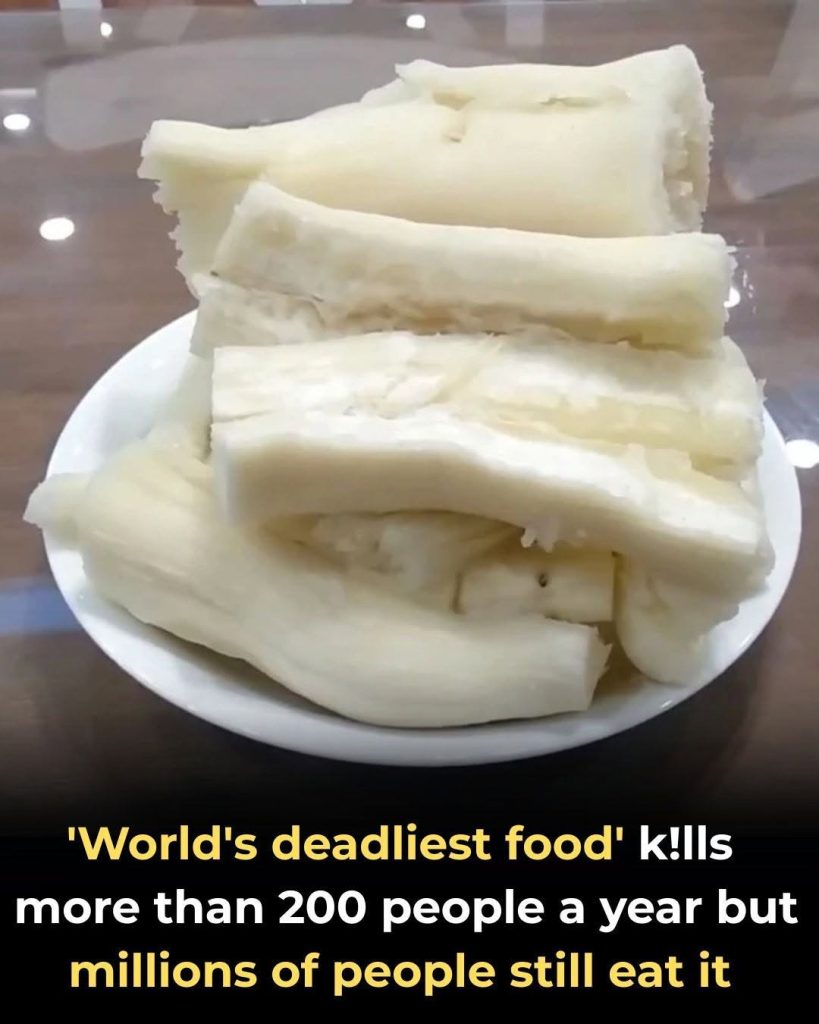
Cassava is one of the world’s most important staple foods.
Millions of people rely on it as an important source of calories, particularly in parts of Africa, Asia, and South America.
But despite its importance as a food crop, cassava can also pose a serious health risk if it is not properly processed and prepared.
This is because certain varieties of cassava contain naturally occurring compounds that can release cyanide.
What Is Cassava?
Cassava is a root crop that originated in South America and is now cultivated in many tropical and subtropical regions around the world.
It is also known by names such as yuca and manioc.
The cassava root can be processed into a variety of foods, including flour, starch, and traditional dishes.
Because the plant grows relatively well under difficult conditions, cassava has become an important food source for hundreds of millions of people.
Why Can Cassava Be Dangerous?
The main concern is the presence of cyanogenic glucosides.
These natural compounds can release hydrogen cyanide when the plant is damaged or improperly processed.
The amount of these compounds varies depending on the cassava variety and other factors.
The leaves, peel, and other parts of the plant can contain potentially harmful levels of these substances.
Eating improperly prepared cassava can therefore lead to cyanide poisoning.
How Does Cyanide Poisoning Happen?
When cyanogenic compounds are not adequately removed during processing, the body can be exposed to excessive amounts of cyanide.
Cyanide interferes with the body’s ability to use oxygen at the cellular level.
A sufficiently high exposure can therefore become life-threatening.
Symptoms of acute cyanide poisoning may include:
- Headache
- Dizziness
- Nausea
- Vomiting
- Weakness
- Confusion
- Difficulty breathing
- Loss of consciousness
Severe poisoning can be fatal.
The Connection With Konzo
One of the serious health conditions associated with poorly processed cassava is konzo.
Konzo is a neurological disorder characterized by sudden and permanent weakness or paralysis, particularly affecting the legs.
It has been associated with high exposure to cyanide from inadequately processed bitter cassava, especially when combined with inadequate protein intake.
The condition has been reported particularly in some communities experiencing severe food insecurity and poverty.
Why Do People Continue to Eat Cassava?
If cassava can be dangerous, why is it eaten by so many people?
The answer is simple: properly processed cassava can be an important and valuable food.
Cassava provides substantial amounts of carbohydrates and calories.
For communities that depend on it as a staple crop, completely avoiding cassava may not be practical.
Instead, traditional food-processing methods have developed to reduce or eliminate the dangerous compounds.
Proper Preparation Is Essential
The key to making cassava safer is proper preparation.
Depending on the variety and traditional method, processing can involve several steps.
These may include:
- Peeling
- Cutting or grating
- Soaking
- Fermenting
- Drying
- Boiling
- Thorough cooking
These processes help reduce the concentration of cyanogenic compounds.
The exact method depends on the type of cassava and the local food tradition.
Soaking and Processing
One method mentioned in discussions of cassava safety involves soaking the cassava for an extended period.
Some traditional processing methods may involve soaking for many hours, sometimes up to a day, followed by additional processing and cooking.
The purpose is to allow harmful compounds to break down or leach out before the food is eaten.
Simply cooking cassava without following appropriate preparation methods may not always be sufficient for every variety or preparation method.
Bitter Cassava Can Be More Dangerous
Cassava varieties are sometimes broadly described as sweet or bitter.
Bitter varieties generally contain higher levels of cyanogenic compounds and therefore require particularly careful processing.
The difference cannot always be judged reliably simply by appearance.
People who traditionally prepare cassava generally rely on established methods appropriate for the particular variety.
Why Food Shortages Can Increase the Risk
The danger can become greater during periods of famine, war, drought, or severe poverty.
When people have limited access to food, they may rely more heavily on cassava.
Under desperate circumstances, people may shorten traditional processing procedures or consume varieties that require more extensive preparation.
This can increase exposure to cyanide.
Cassava Is Not Simply a “Deadly Food”
Calling cassava the “world’s deadliest food” is a dramatic way of presenting the issue.
Cassava itself is not inherently poisonous when it is properly processed.
Millions of people consume cassava safely.
The real concern is improperly prepared cassava, particularly varieties containing high levels of cyanogenic compounds.
This distinction is important.
The Importance of Traditional Knowledge
Communities that have relied on cassava for generations have developed detailed methods for processing it safely.
These traditions can include:
- Selecting appropriate varieties
- Removing the peel
- Grating or crushing the root
- Soaking or fermenting it
- Drying it
- Cooking it thoroughly
Traditional knowledge can therefore play an important role in preventing poisoning.
What Should Consumers Do?
People should not experiment with cassava-processing methods if they are unfamiliar with the plant.
If cassava is part of your diet, it is important to use reliable preparation instructions appropriate for the specific variety.
Do not eat raw cassava roots or improperly prepared cassava products.
Commercial cassava products that have already been properly processed are generally prepared specifically for safe consumption.
A Valuable Food With a Serious Safety Issue
Cassava demonstrates an important principle of food safety.
A food can be nutritious and widely consumed while still requiring careful preparation.
Similar examples exist throughout the world, where traditional processing is necessary to remove naturally occurring toxins or harmful compounds.
In the case of cassava, correct processing can make the difference between a useful staple food and a potentially dangerous source of poisoning.
Conclusion
Cassava is an important staple food consumed by hundreds of millions of people around the world.
Although it contains naturally occurring cyanogenic compounds that can release cyanide, cassava can be safely consumed when it is properly processed and cooked.
The greatest danger comes from eating cassava that has not been adequately prepared, particularly bitter varieties with higher levels of cyanogenic compounds.
Improper processing can lead to cyanide poisoning and, in severe or chronic cases, serious neurological problems such as konzo.
So the lesson is not that people should be afraid of cassava.
The lesson is that proper preparation is essential.
Cassava has supported communities for generations, but like any food that contains naturally occurring toxins, it must be handled and prepared correctly.