Choosing the Right Sleeping Position: How It May Influence Your Health
Sleep is an essential part of maintaining good physical and mental health.
While people often focus on how many hours they sleep, another factor may also affect comfort and sleep quality: sleeping position.
The position you choose can influence your breathing, spinal alignment, pressure on different parts of the body, and symptoms such as snoring or acid reflux.
There is no single sleeping position that is perfect for everyone.
The best position depends on your individual needs, health conditions, and personal comfort.
1. Sleeping on Your Back
Sleeping on your back, also called the supine position, keeps your body facing upward while your head rests on the pillow.
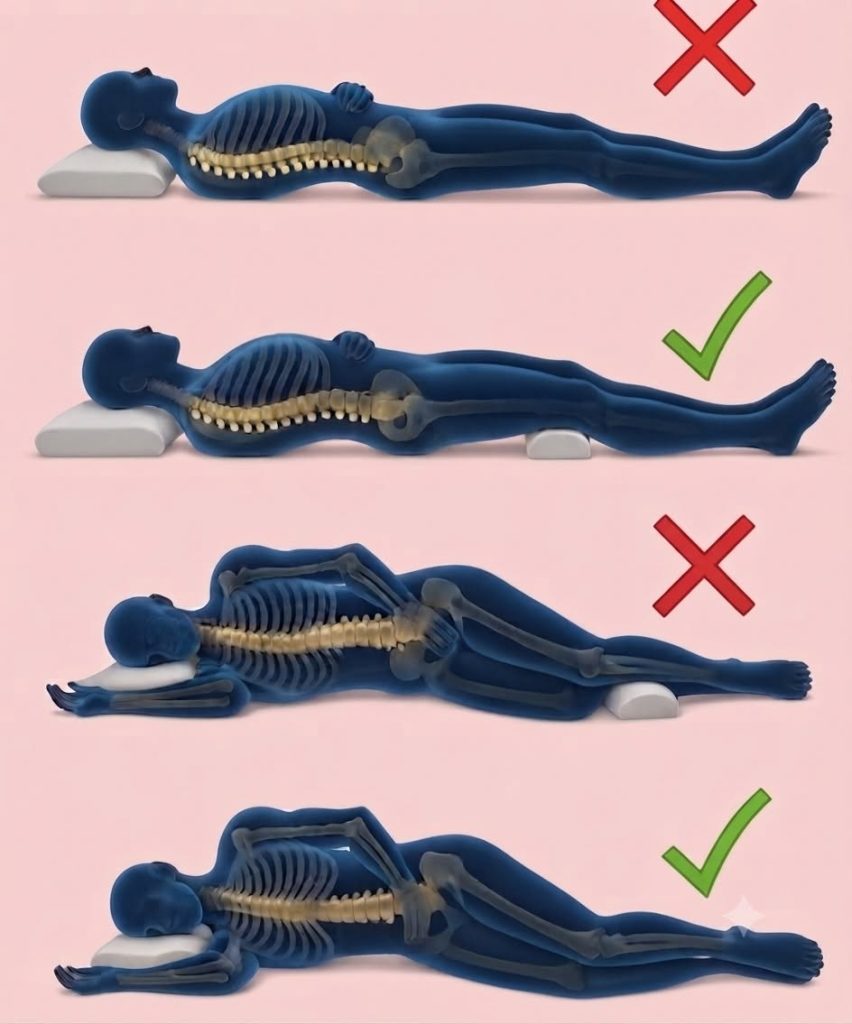
One potential advantage is that it can help maintain a relatively neutral position for the spine when the mattress and pillow provide adequate support.
A pillow under the knees may also reduce pressure on the lower back for some people.
However, sleeping on the back is not ideal for everyone.
For some people, especially those who snore or have obstructive sleep apnea, lying on the back can make breathing problems worse.
This happens because gravity can allow the tongue and other soft tissues to move toward the back of the throat.
If you regularly snore loudly, wake up gasping, or experience excessive daytime sleepiness, it is worth discussing these symptoms with a healthcare professional.
2. Sleeping on Your Side
Side sleeping is one of the most common sleeping positions.
It can be particularly useful for people who experience snoring or certain breathing problems during sleep.
Sleeping on your side may help keep the airway more open compared with sleeping flat on your back.
The position can also be helpful for people who experience acid reflux, especially when sleeping on the left side.
For some people, however, side sleeping may place pressure on the shoulder or hip.
Using a pillow that keeps the head and neck aligned with the spine can help improve comfort.
Placing a pillow between the knees may also help maintain a more comfortable position for the hips and lower back.
3. Sleeping on Your Stomach
Sleeping on the stomach is sometimes called the prone position.
Some people naturally prefer this position, and it may reduce snoring for certain individuals because the airway can remain more open than when lying on the back.
However, stomach sleeping has a potential disadvantage: the head usually has to remain turned to one side in order to breathe.
This can place strain on the neck.
It may also increase pressure on the lower back if the body is not properly supported.
For these reasons, stomach sleeping is generally not considered the best position for maintaining comfortable spinal alignment.
If you naturally sleep on your stomach and have no discomfort, you may still be able to make the position more comfortable by using an appropriately supportive mattress and a relatively thin pillow.
4. The Best Position for Back Pain
People with back pain may benefit from sleeping in a position that keeps the spine in a comfortable and relatively neutral alignment.
For some people, sleeping on the back with a pillow underneath the knees can help.
For others, sleeping on the side with a pillow between the knees may feel better.
There is no universal rule.
The most important factor is whether the position reduces discomfort and allows you to sleep comfortably.
If back pain is severe, persistent, or associated with weakness, numbness, or other concerning symptoms, medical evaluation may be necessary.
5. The Best Position for Acid Reflux
Sleeping position can affect symptoms of acid reflux.
For some people, lying on the left side may reduce nighttime reflux compared with lying on the right side or back.
Another useful strategy is to avoid eating large meals shortly before going to bed.
Elevating the upper body can also help some people with nighttime reflux.
If reflux happens frequently, causes significant discomfort, or interferes with sleep, it is worth discussing with a healthcare professional.
6. Sleeping During Pregnancy
During pregnancy, comfort and safety become especially important.
Side sleeping is commonly recommended during later pregnancy, particularly because lying flat on the back for prolonged periods may become uncomfortable and can affect blood flow.
Many pregnant people find that sleeping on the side with a pillow between the knees or using a pregnancy pillow provides additional support.
Pregnancy is different for every person, so individual medical advice should take priority.
7. Choosing the Right Pillow
Your sleeping position is only one part of the equation.
The pillow also plays an important role.
A pillow should support your head and neck without forcing them too far upward or downward.
Side sleepers generally need a thicker pillow than stomach sleepers because the shoulder creates more distance between the head and the mattress.
Back sleepers often benefit from a medium-height pillow that supports the natural curve of the neck.
Stomach sleepers may be more comfortable with a very thin pillow or, in some cases, no pillow under the head.
8. Your Mattress Matters Too
A suitable mattress can help support comfortable sleep.
A mattress that is too soft may allow the body to sink excessively.
A mattress that is too firm may create uncomfortable pressure points.
The ideal firmness depends partly on your body type, sleeping position, and personal preference.
There is no single mattress firmness that works perfectly for everyone.
9. Should You Change Your Sleeping Position?
If you sleep comfortably, wake up feeling rested, and do not experience symptoms such as pain, numbness, or breathing problems, there may be no reason to force yourself into a different position.
However, changing positions may be worth trying if you regularly experience:
- Neck or back pain
- Frequent snoring
- Nighttime acid reflux
- Shoulder or hip discomfort
- Poor-quality sleep
- Difficulty breathing while sleeping
Small adjustments can sometimes make a significant difference.
How to Find Your Most Comfortable Position
Try making gradual changes rather than forcing yourself to completely change the way you sleep overnight.
For example, if you normally sleep on your back but experience snoring, try sleeping on your side.
If you experience lower-back discomfort while side sleeping, try placing a pillow between your knees.
Experiment with different pillow heights and positions until your neck and spine feel comfortable.
Your goal should not be to find a “perfect” position.
The goal is to find a position that supports comfortable, uninterrupted sleep.
When Should You Talk to a Doctor?
Sleeping position can influence certain symptoms, but it should not be used to diagnose a medical condition.
Speak with a healthcare professional if you regularly experience:
- Loud or persistent snoring
- Pauses in breathing during sleep
- Waking up choking or gasping
- Severe or persistent pain
- Significant daytime sleepiness
- Frequent nighttime acid reflux
These symptoms can sometimes indicate an underlying condition that requires treatment.
The Bottom Line
There is no single sleeping position that is best for everyone.
Side sleeping may be helpful for some people with snoring, certain breathing problems, or nighttime acid reflux.
Back sleeping can support a neutral spinal position for some people, but it may worsen snoring or obstructive sleep apnea.
Stomach sleeping may reduce snoring for some people but can place additional strain on the neck and back.
Ultimately, the best sleeping position is the one that allows you to breathe comfortably, minimizes pain, supports your body, and helps you get restorative sleep.
Small changes to your sleeping position, pillow, or mattress may improve comfort, but persistent symptoms should be evaluated by a healthcare professional.