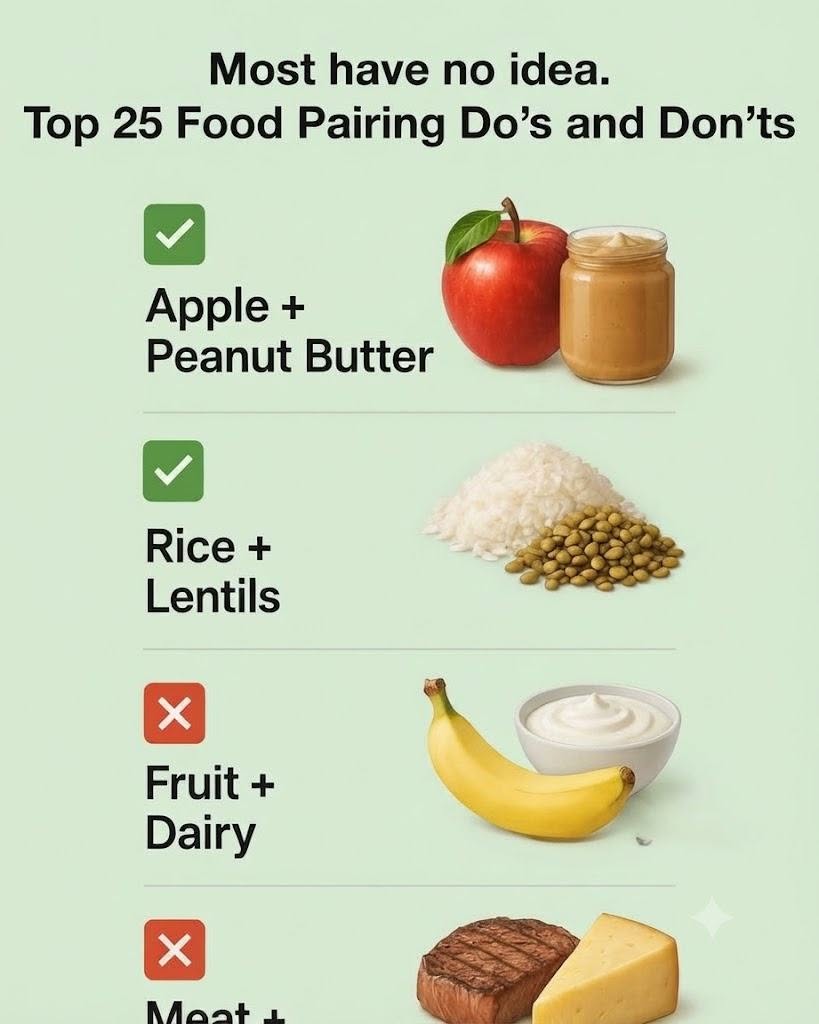
The important distinction is that some pairings really can affect nutrient absorption, whereas others are simply examples of healthy meals—not scientifically necessary combinations.
| # | Article’s advice | My verdict |
|---|---|---|
| 1 | Tomatoes + olive oil | 🟢 Good evidence |
| 2 | Avoid tea immediately after iron-rich meals | 🟢 Generally true |
| 3 | Spinach + vitamin C | 🟢 True |
| 4 | Grapefruit + certain medications | 🟢 Definitely true |
| 5 | Turmeric + black pepper | 🟢 Absorption effect is real |
| 6 | Calcium + iron supplements | 🟢 Reasonable |
| 7 | Oatmeal + berries | 🟢 Healthy, but not a special pairing |
| 8 | Alcohol + energy drinks | 🟢 Good warning |
| 9 | Yogurt + fruit | 🟢 Healthy combination, not essential |
| 10 | Salty foods + alcohol | 🟡 Reasonable but overstated |
| 11 | Beans + brown rice | 🟢 Nutritious, but no need to eat them together |
| 12 | Processed meat + sugary soda | 🟢 Good dietary advice |
| 13 | Nuts + fruit | 🟡 Reasonable, but “steadier blood sugar” is simplified |
| 14 | Coffee immediately after meals | 🟢 Relevant for iron absorption |
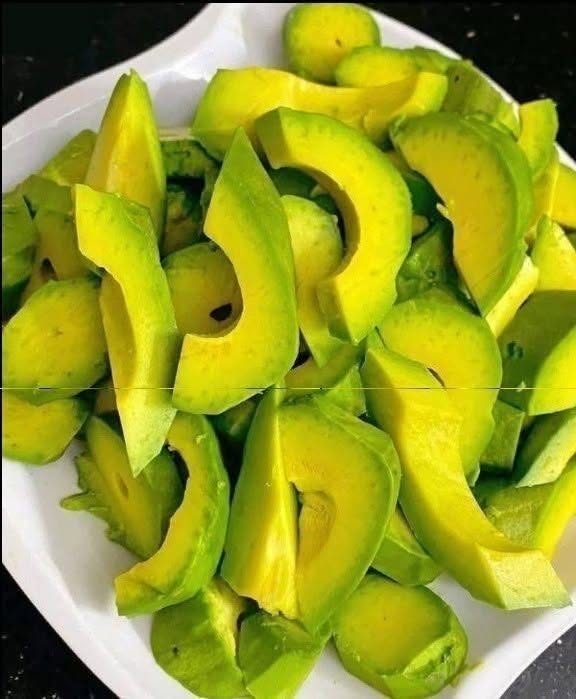
| 15 | Avocado + salad | 🟢 Good evidence |
| 16 | High-sodium meal + sugary drinks | 🟡 Generally sensible, but not a special interaction |
| 17 | Eggs + vegetables | 🟢 Good evidence for carotenoid absorption |
| 18 | Heavy fatty meals before bed | 🟢 Reasonable, especially for reflux |
| 19 | Dark chocolate + berries | 🟡 Healthy foods, but the pairing isn’t necessary |
| 20 | Extra salt + processed foods | 🟢 Good advice |
| 21 | Fatty fish + leafy greens | 🟢 Healthy meal |
| 22 | Sugary dessert after a large meal | 🟡 Mostly about total calories |
| 23 | Lemon + lentils | 🟢 Good evidence |
| 24 | Whole fruit rather than juice | 🟢 Strong advice |
| 25 | Whole-grain bread + peanut butter | 🟢 Good balanced snack |
The article’s 25 recommendations are laid out in the source itself.
The most scientifically useful points
1. Vitamin C + plant iron
This is one of the genuinely useful combinations. Lentils, beans and other plant foods contain non-heme iron, and vitamin C can improve its absorption. So something like:
lentils + lemon 🍋
is a genuinely sensible combination. The article gets this right.
2. Tea/coffee + iron
This is also legitimate. Tea and coffee contain compounds that can reduce absorption of non-heme iron. It’s particularly relevant if someone has low iron or is taking iron supplements.
But I wouldn’t interpret this as “everyone must wait exactly one hour.” That’s an overly rigid rule.
3. Fat + vegetables
The tomato + olive oil and avocado + salad recommendations have a real nutritional basis because dietary fat can increase absorption of carotenoids and other fat-soluble compounds.
4. Grapefruit + medication
This is potentially the most important warning in the article. Grapefruit really can interact with certain medicines, sometimes substantially. But it doesn’t interact with all medications, so the correct advice is to check the specific medicine.
Where the article becomes misleading
The biggest issue is the “food pairing” framing.
Eating protein and carbohydrates together isn’t inherently bad. You don’t need to separate fruit from protein, starch from meat, etc. Your digestive system is designed to process mixed meals.
There is even a randomized clinical trial comparing a “food-combining” diet with a conventional balanced diet. At the same calorie intake, the food-combining diet did not produce additional weight loss or fat loss.
So don’t take the article to mean:
“These foods must be eaten together, and those foods must never be eaten together.”
That’s not supported by good evidence.
One correction I’d make to the article
The article says that beans + brown rice make a “more complete protein source.” That’s a common nutrition statement, but it’s unnecessarily simplistic.
You do not have to combine complementary plant proteins in the same meal to obtain adequate protein. Eating a varied diet over the course of the day is sufficient for most people.
Likewise, oatmeal + berries, yogurt + fruit, dark chocolate + berries, fish + greens, and whole-grain bread + peanut butter are good meals/snacks, but there’s no special biological rule requiring those foods to be paired.
My final rating
Scientific accuracy: ~8/10
Useful practical advice: ~8.5/10
Risk of misleading the reader: moderate
The article is not something I’d classify as dangerous misinformation. In fact, its final paragraph correctly says that food pairing shouldn’t be treated as rigid rules and that the overall dietary pattern matters most.
But I’d separate its recommendations into two categories:
Actually evidence-based interactions
- Vitamin C → plant iron
- Tea/coffee → reduced non-heme iron absorption
- Calcium → can affect iron absorption
- Fat → improved carotenoid absorption
- Grapefruit → interactions with certain medicines
- Alcohol + energy drinks → potentially risky
Mostly just healthy-food suggestions
- Oatmeal + berries
- Yogurt + fruit
- Fish + greens
- Eggs + vegetables
- Nuts + fruit
- Bread + peanut butter
- Dark chocolate + berries
So you don’t need to worry about “wrong” food combinations. Think of these as optional ways to optimize an already healthy diet, not rules you must follow.