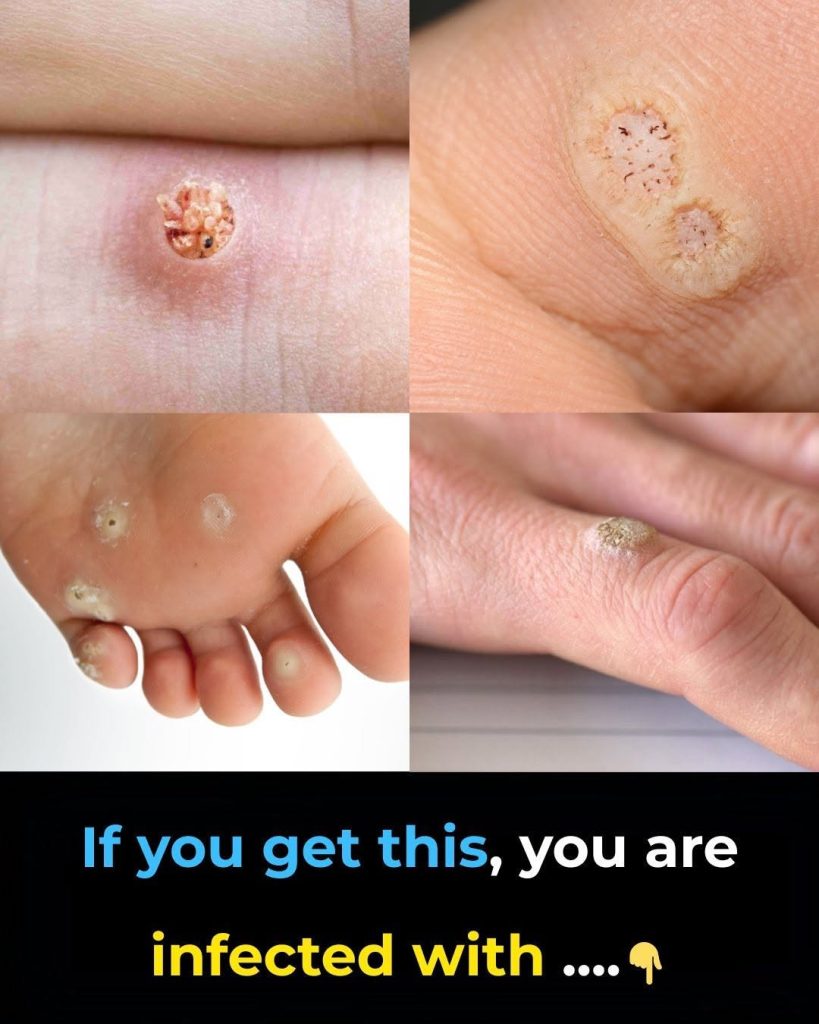
6 Types of Warts: Signs, Symptoms, Home Remedies, and Treatment
Warts are small growths that can appear on different parts of the skin. They are usually harmless, but they can sometimes be uncomfortable, embarrassing, or difficult to remove.
Warts are caused by certain types of the human papillomavirus (HPV). The virus can enter the skin through small cuts, scratches, or damaged areas and cause the skin cells to grow more quickly.
There are several different types of warts. Their appearance and location can help distinguish one type from another.
1. Common Warts
Common warts are among the most frequent types of warts. They usually appear on the hands and fingers, although they can develop elsewhere.
They often have a rough, grainy surface and may look like a small, hard bump on the skin. Some common warts contain tiny black dots, which are small blood vessels.
Common warts are usually painless, but they can become irritated if they are repeatedly touched, scratched, or injured.
2. Plantar Warts
Plantar warts develop on the soles of the feet.
Unlike many other warts, plantar warts often grow inward because the pressure from walking pushes them deeper into the skin.
They may appear as hard areas of thickened skin and can sometimes have small black dots.
Plantar warts can be painful, especially when walking or standing. Some people describe the sensation as feeling like they are walking with a small stone inside their shoe.
3. Flat Warts
Flat warts are usually smaller and smoother than common warts.
They can be pink, brown, or skin-colored and often appear in larger numbers. They are commonly found on the face, arms, or legs.
Children and young adults may be more likely to develop flat warts.
Because they are relatively smooth and small, flat warts can sometimes be difficult to notice at first.
4. Filiform Warts
Filiform warts are long, narrow growths that often develop around the face.
They commonly appear around the mouth, nose, or eyes. Their thin, thread-like shape makes them different from most other types of warts.
Because they can occur on visible areas of the face, they may be particularly bothersome from a cosmetic perspective.
Warts located near the eyes should be evaluated carefully by a healthcare professional rather than treated aggressively at home.
5. Periungual Warts
Periungual warts develop around or underneath the fingernails and toenails.
They may interfere with normal nail growth and can sometimes cause discomfort.
People who frequently bite their nails or pick at the skin around their nails may have a higher risk of developing these warts because small injuries can make it easier for the virus to enter the skin.
Treatment can sometimes be more difficult when a wart is located close to or underneath a nail.
6. Genital Warts
Genital warts occur around the genital area and are caused by certain types of HPV.
They can appear as small bumps or groups of growths and may be skin-colored, pink, or slightly darker.
Unlike common warts, genital warts are sexually transmitted. They can spread through intimate skin-to-skin contact.
Anyone who notices unusual growths in the genital area should seek medical advice rather than attempting to remove them with over-the-counter wart treatments designed for the hands or feet.
Common Signs and Symptoms of Warts
The appearance of a wart can vary depending on its type and location.
Common signs may include:
- A small, raised growth
- Rough or grainy skin
- A hard bump
- Small dark dots within the wart
- Several similar growths close together
- Pain or tenderness, especially with plantar warts
Not every skin growth is a wart. Other skin conditions can look similar, so a healthcare professional may be needed to confirm the diagnosis.
How Do Warts Spread?
Warts are contagious because they are caused by a virus.
The virus can spread through direct skin-to-skin contact or by touching contaminated surfaces. It can also spread from one part of the body to another.
Picking, scratching, or cutting a wart can increase the possibility of spreading the virus to nearby skin.
To reduce the risk of spreading warts, avoid sharing personal items such as towels, razors, nail clippers, or other objects that come into direct contact with the skin.
Can Warts Go Away on Their Own?
Yes.
Many warts eventually disappear without treatment because the immune system can recognize and fight the virus.
However, this can take months or even longer. Some warts disappear relatively quickly, while others may remain for years.
Treatment may be considered when a wart is painful, spreading, persistent, or causing significant discomfort or embarrassment.
Home Treatment Options
Some common warts can be treated at home with over-the-counter products.
Salicylic Acid
Salicylic acid is one of the most common treatments for ordinary warts.
It works by gradually removing the layers of thickened skin.
Treatment usually requires regular application over a period of time. The surrounding healthy skin should be protected as much as possible because salicylic acid can cause irritation.
Keeping the Area Covered
Covering a wart with a bandage can help prevent irritation and may reduce the chance of spreading it to other parts of the body.
It is also important to keep the area clean and avoid picking or scratching the wart.
Avoid Cutting the Wart Yourself
Cutting, burning, or aggressively removing a wart at home can cause bleeding, infection, and scarring.
It may also spread the virus to nearby skin.
For this reason, home treatment should be gentle and should follow the instructions provided with the product.
Medical Treatments for Warts
When home treatment does not work, a doctor or dermatologist may recommend another treatment.
Cryotherapy
Cryotherapy involves freezing the wart, usually with liquid nitrogen.
The freezing damages the wart tissue, and the treated area eventually heals.
Several treatment sessions may sometimes be required.
Prescription Treatments
Depending on the type and location of the wart, a healthcare professional may recommend prescription medications or other procedures.
Treatment choice depends on factors such as the person’s age, the location of the wart, the number of warts, and how long they have been present.
Surgical or Laser Treatment
In difficult cases, doctors may use procedures such as surgical removal or laser treatment.
These options are generally considered when other treatments have failed or when the wart is particularly persistent.
When Should You See a Doctor?
Although most warts are harmless, medical evaluation is recommended if:
- You are not sure whether the growth is a wart.
- The growth is painful or bleeding.
- It changes in appearance.
- It grows rapidly.
- It repeatedly returns after treatment.
- It is located on the face or genitals.
- You have many warts.
- You have a weakened immune system.
- Home treatment does not work.
A healthcare professional can determine whether the growth is actually a wart and recommend an appropriate treatment.
How to Prevent Warts
It is not always possible to prevent warts completely, but several habits can reduce the risk of spreading them.
Try to:
- Wash your hands regularly.
- Avoid picking or scratching warts.
- Keep warts covered when appropriate.
- Do not share towels or personal grooming tools.
- Avoid biting your nails.
- Keep cuts and scratches clean and covered.
- Wear footwear in communal showers and swimming-pool areas.
- Avoid touching someone else’s wart directly.
Conclusion
Warts are common skin growths caused by certain types of HPV. There are several varieties, including common warts, plantar warts, flat warts, filiform warts, periungual warts, and genital warts.
Most warts are harmless and may eventually disappear without treatment. However, some can be painful, persistent, or easily spread to other areas of the body.
Over-the-counter treatments such as salicylic acid can be helpful for certain ordinary warts, while persistent or unusual growths may require professional treatment.
The most important thing is to avoid cutting or aggressively removing warts yourself and to seek medical advice when the diagnosis is uncertain or the growth is painful, changing, bleeding, or located in a sensitive area.
With appropriate care and patience, most warts can eventually be managed successfully.