Is Your Body Missing Vitamin B12? Here Are 10 Possible Warning Signs
Vitamin B12 is an essential nutrient that plays an important role in keeping the body healthy. It helps produce red blood cells, supports normal nerve function, contributes to DNA production, and helps maintain healthy brain function.
Because the body can store vitamin B12 in the liver, a deficiency may develop slowly over months or even years. As a result, some people may not notice the symptoms immediately or may mistake them for stress, aging, or another health problem.
Here are 10 possible warning signs of vitamin B12 deficiency.
1. Persistent Fatigue and Weakness
Feeling tired from time to time is normal, but persistent fatigue can sometimes be associated with vitamin B12 deficiency.
When the body does not have enough B12, it may have difficulty producing healthy red blood cells. This can contribute to anemia and reduce the amount of oxygen delivered throughout the body.
Possible symptoms include:
- Constant tiredness
- Weakness
- Low energy
- Reduced ability to exercise
- Feeling exhausted even after adequate rest
However, fatigue has many possible causes, so it should not automatically be blamed on vitamin B12 deficiency.
2. Tingling or Numbness in the Hands and Feet
Vitamin B12 is important for healthy nerve function.
When B12 levels are too low, some people may experience unusual sensations, particularly in the hands and feet.
These can include:
- Tingling
- Pins-and-needles sensations
- Numbness
- Burning sensations
Persistent neurological symptoms should be evaluated by a healthcare professional because prolonged vitamin B12 deficiency can cause nerve damage.
3. Difficulty Walking or Poor Balance
More advanced vitamin B12 deficiency can affect the nervous system and may contribute to problems with coordination.
Some people may notice:
- Unsteady walking
- Poor balance
- Frequent stumbling
- Feeling less coordinated than usual
These symptoms can also have many other neurological causes, so medical evaluation is important.
4. Memory Problems or Difficulty Concentrating
Some people with vitamin B12 deficiency report changes in their ability to think or concentrate.
Possible symptoms include:
- Forgetfulness
- Difficulty concentrating
- Mental fog
- Trouble staying focused
However, these symptoms are not specific to B12 deficiency. Stress, poor sleep, depression, thyroid problems, and other health conditions can produce similar effects.
5. Pale or Slightly Yellow Skin
Vitamin B12 deficiency can contribute to a type of anemia called megaloblastic anemia.
When red blood cell production is affected, a person may develop pale skin.
In some cases, the skin or whites of the eyes may also take on a slightly yellow appearance because of changes involving abnormal red blood cells.
Other symptoms of anemia can include:
- Fatigue
- Weakness
- Shortness of breath
- Reduced exercise tolerance
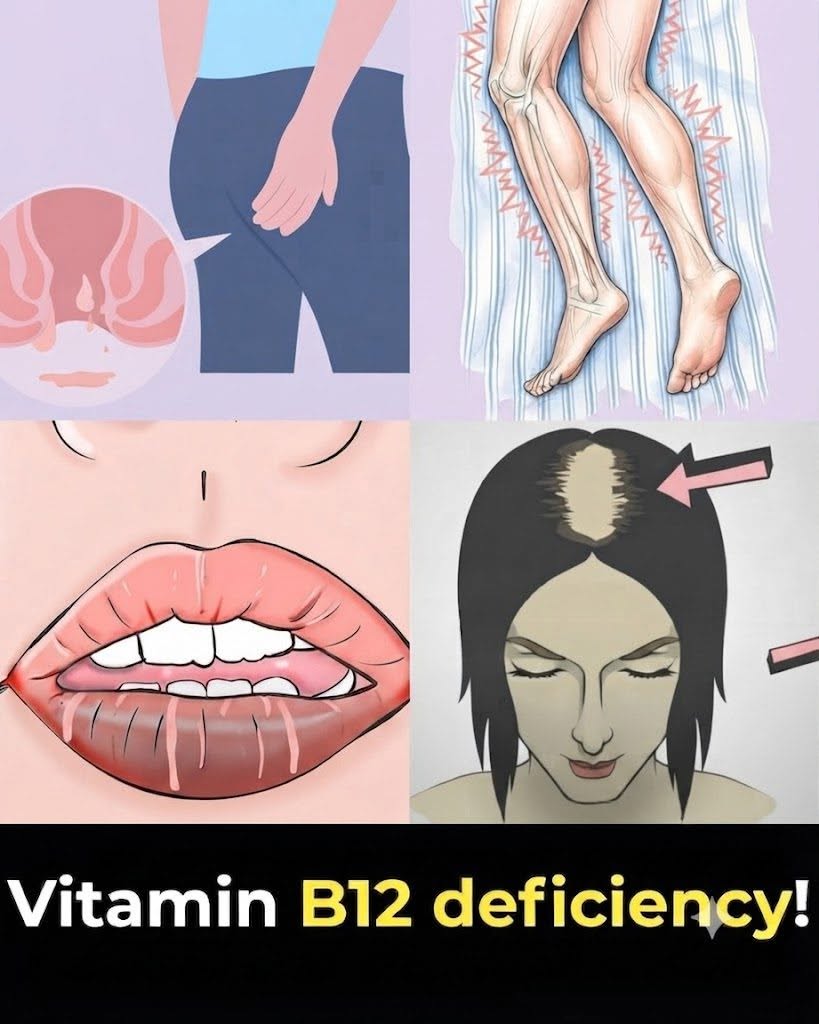
6. A Smooth, Sore, or Red Tongue
Changes in the tongue and mouth can sometimes occur when vitamin B12 levels are low.
The tongue may become:
- Smooth
- Red
- Tender
- Sore
- Burning
Some people may also experience mouth sores or changes in taste.
Inflammation of the tongue associated with this condition is sometimes called glossitis.
7. Shortness of Breath or Heart Palpitations
If vitamin B12 deficiency causes anemia, the body may work harder to deliver enough oxygen to tissues.
As a result, some people may experience:
- Shortness of breath during physical activity
- Rapid heartbeat
- Heart palpitations
- Reduced stamina
These symptoms can also be caused by heart conditions, lung problems, iron-deficiency anemia, and other medical conditions.
For this reason, unexplained shortness of breath or palpitations should be medically evaluated.
8. Mood Changes
Vitamin B12 is involved in normal brain and nervous system function.
Some people with a deficiency may experience changes in mood, such as:
- Irritability
- Low mood
- Depression
- Increased anxiety
However, mood changes have many possible causes. Vitamin B12 deficiency is only one potential explanation.
If significant or persistent changes in mood occur, professional medical advice is recommended.
9. Vision Changes
Severe or prolonged vitamin B12 deficiency can, in rare cases, affect the optic nerve.
Possible symptoms may include:
- Blurred vision
- Reduced visual clarity
- Difficulty seeing clearly
Vision changes should never automatically be attributed to vitamin B12 deficiency.
Any new or unexplained change in vision deserves prompt medical attention because it can have many different causes.
10. Loss of Appetite or Unexplained Weight Loss
Some people with vitamin B12 deficiency may experience changes in appetite.
Possible symptoms include:
- Reduced appetite
- Unexplained weight loss
- Digestive discomfort
- Mild nausea
These symptoms are very general and can occur with many different health conditions.
They should therefore be considered alongside other symptoms and medical findings rather than being treated as proof of vitamin B12 deficiency.
Who Is Most at Risk of Vitamin B12 Deficiency?
Although anyone can develop vitamin B12 deficiency, certain groups have a higher risk.
Older Adults
As people age, changes in stomach acid production can make it more difficult for the body to absorb vitamin B12 from food.
People Following Vegan Diets
Vitamin B12 occurs naturally mainly in animal-based foods.
People following a strict vegan diet may therefore be at increased risk if they do not regularly consume fortified foods or take an appropriate supplement.
People With Digestive Disorders
Certain digestive conditions can interfere with the absorption of vitamin B12.
Examples include:
- Celiac disease
- Crohn’s disease
- Certain stomach disorders
People Who Have Had Certain Surgeries
Some stomach or intestinal surgeries can interfere with the body’s ability to absorb vitamin B12.
People Taking Certain Medications
Long-term use of some medications, including metformin and certain acid-reducing medicines, may affect vitamin B12 absorption in some people.
People should not stop prescribed medication without first discussing it with a healthcare professional.
How Is Vitamin B12 Deficiency Diagnosed?
Symptoms alone cannot confirm vitamin B12 deficiency.
A healthcare professional may consider your medical history and perform a physical examination before ordering blood tests.
Possible tests include:
- Complete blood count (CBC)
- Serum vitamin B12 level
- Methylmalonic acid (MMA)
- Homocysteine
Additional testing may be appropriate depending on the individual’s symptoms and medical history.
Blood testing helps determine whether symptoms are actually related to vitamin B12 deficiency or another condition.
Foods Rich in Vitamin B12
Vitamin B12 can be obtained from a variety of foods.
Natural sources include:
- Fish
- Salmon
- Tuna
- Shellfish
- Beef
- Chicken
- Eggs
- Milk
- Cheese
- Yogurt
People who follow vegetarian or vegan diets can obtain B12 from fortified foods such as certain plant-based milks, breakfast cereals, and nutritional yeast.
Some people may also need vitamin B12 supplements depending on their diet, absorption, age, or medical circumstances.
Can Vitamin B12 Deficiency Be Treated?
Yes. Vitamin B12 deficiency is generally treatable.
Treatment depends on the cause and severity of the deficiency.
Depending on the individual situation, a healthcare professional may recommend:
- Dietary changes
- Oral vitamin B12 supplements
- High-dose oral B12
- Vitamin B12 injections
Treating the underlying cause is also important.
For example, if the deficiency is caused by poor absorption, simply changing the diet may not be enough.
Early treatment is particularly important when neurological symptoms are present because prolonged nerve damage may become difficult to reverse.
Common Myths About Vitamin B12
Myth: Everyone Who Feels Tired Needs Vitamin B12
Not necessarily.
Fatigue has many possible causes, including poor sleep, stress, anemia, thyroid problems, and other medical conditions.
Taking B12 without confirming a deficiency may not solve the underlying problem.
Myth: More Vitamin B12 Always Means More Energy
Vitamin B12 is essential for normal energy metabolism, but taking extra B12 does not necessarily give someone more energy if they already have adequate levels.
Myth: Only Vegans Can Develop B12 Deficiency
This is not true.
Although strict vegan diets can increase the risk of deficiency without appropriate supplementation, older adults and people with absorption problems can also develop low B12 levels.
Myth: You Can Diagnose B12 Deficiency From Symptoms Alone
Symptoms can suggest a possible deficiency, but they cannot confirm it.
Appropriate medical evaluation and, when indicated, blood testing are needed for diagnosis.
Simple Ways to Maintain Healthy Vitamin B12 Levels
You can support healthy B12 levels by:
- Eating a balanced diet containing reliable sources of vitamin B12.
- Using fortified foods when appropriate.
- Following medical advice if you have a digestive condition.
- Discussing B12 monitoring with your healthcare provider if you take medications that may affect absorption.
- Attending routine health checkups.
- Seeking medical evaluation if persistent symptoms develop.
When Should You See a Doctor?
Consider speaking with a healthcare professional if you experience persistent:
- Fatigue
- Numbness or tingling
- Balance problems
- Memory or concentration changes
- Mouth or tongue soreness
- Unexplained weakness
- Vision changes
- Other unexplained symptoms
Early diagnosis can be particularly important when neurological symptoms are present.
The Bottom Line
Vitamin B12 is essential for healthy nerves, red blood cell production, brain function, and many other processes in the body.
A deficiency can develop gradually, and its symptoms may be easy to overlook.
Persistent fatigue, numbness, balance problems, memory changes, tongue soreness, and other symptoms may occur with vitamin B12 deficiency, but none of these signs alone proves that a person is deficient.
The best way to determine whether vitamin B12 is actually low is through appropriate medical evaluation and, when necessary, blood testing.
If a deficiency is confirmed, treatment is usually effective, especially when it is identified early.
The most important approach is to maintain a balanced diet, understand your individual risk factors, and seek professional advice when persistent or unusual symptoms appear.